
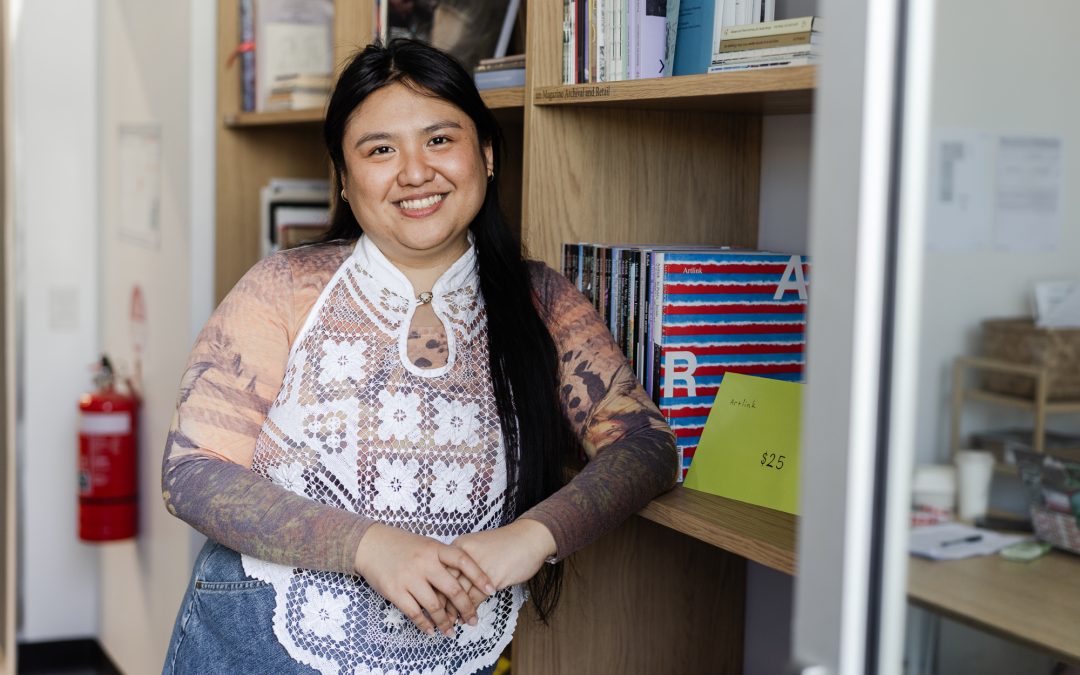
Image: Alyssa Powell-Ascura, photo: Lana Adams.
Alyssa Powell-Ascura is a multi-hyphenated creative and artist based on Kaurna Country, with connections across respective Naarm, Meanjin and Kombumerri Country. She is primarily known as a visual artist, writer, and curator. Her work intricately holds space for an open dialogue, intertwining personal history with broader societal narratives.
Alyssa undertook a Catapult Mentorship with Isabel and Alfredo Aquilizan – an Award-winning and internationally-acclaimed husband-and-wife duo. Based in the Philippenes, they create highly detailed installations and sculptures that spark conversations around ideas of identity, migration, journey and displacement.
As part of her Catapult Mentorship, Alyssa traveled to the Philippines to ground the exchange. Learn more about her transformative experience in the interview below.
For AusArt Day 2026, Guildhouse is campaigning to Catapult Creativity and raise funds for the flagship Catapult Mentorship Program, enabling more South Australian artists to access transformative, paid, artist-led mentorships.
Learn more and contribute here.
How did you decide on and approach your mentor?
Having been originally from the east coast, I actually grew up seeing The Aquilizans artworks in QAGOMA for APT and various exhibitions. I believe they were one of the first Asian artists I felt really drawn to, not only because we shared similar cultural backgrounds, but because of their ethos of working, and how they deeply involved their family and the wider community as part of their works. It’s something that really resonates with my way of working, and I had always hoped to meet them in the future as I grew into my practice. I didn’t think it would be so soon though!
My first meeting with them was pure coincidence and kismet. I went to the Creative Australia thanksgiving party where The Aquilizans were one of the many amazing artists receiving recognition for the Asia Pacific Awards. I literally just came up to them, introduced myself and chatted for a while. Even as a confident person, I was a bit shy but I thought to myself, “I don’t think I’ll lose anything if I shoot my shot (foreshadowing Slam Dunk…)” so I asked Tita Isabel and Tito Freddie if they would like to mentor me, and without hesitation, they said yes!
What was it like undertaking international travel as part of your mentorship?
Travelling to the Philippines was the highlight of this mentorship, as I feel like it grounded the experience and actually really helped with my upcoming solo exhibition, Slam Dunk, at Post Office Projects (November 15th to December 19th, 2026).
You know me, I love a residency, so I took it upon myself to basically create my own self-guided mini residency during this mentorship. I stayed in different parts of Manila, as well as Cavite and Laguna.
I met a lot of different people, from institutions, commercial galleries, to independent creatives part of grassroots initiatives. This was imperative to the mentorship, as it gave me an insight to the ecology of the Philippines arts and culture landscape. And it also was an opportunity to introduce myself to key people in the industry. One person I was so excited I got to meet was Luis Enano Yee Jr. a.k.a. Junyee who is the Tatay or Father of installation art in the Philippines. Tita Isabel organised the casual hang out, and we had a really wonderful, long conversation about his practice – and he was also interested in hearing about mine – which I was so kilig about.
Whilst in Los Banos, Laguna, I was able to visit Fruitjuice Factori Studio, where The Aquilizans currently are living and working out of. Laguna is such a hotspot for artists, particularly experimental and socially engaged artists who focus on community arts and participatory engagements. My visit was also coincidentally perfectly timed, as almost all of their children (who are also artists, and some around my age) were in the Philippines visiting, or are in the process of being based there. Honestly, they were so generous with their time with me, and it felt like coming home to visit family and hanging out with your cool, creative cousins.
What were you hoping to gain from the mentorship process?
One thing I loved about the Catapult program is having the agency to create and shape the mentorship my way.
I didn’t have any previous experience undertaking a mentorship, so I wasn’t sure what it would look like. I had some general ideas and milestones I wanted to meet, but I was also open to alternatives. I think being open and flexible was really an advantage – I had to be okay with changes on the daily, and if people were stuck in traffic, or plans changed, or whatever the challenge of the day was, you simply improvise and move on.
This was actually reaffirming for me, as improvising and going with the flow suited my practice a bit more than rigid planning.
Within an Australian context, I always felt like other people’s methodology was so vastly different from mine. At the beginning, I was constantly worried about not being on time, or taking up too much of other people’s time… basically things that felt very colonial to me. I was always thinking of ethical dilemmas, how to ensure the works are not tokenising or extracting from my communities, whilst others were just… creating whatever they want. In the Philippines, it was a breath of fresh air to see others creating in a similar way to me.
What I was really hoping to gain, is simply, to seek ways to be able to present work that is equally conceptually sound, aesthetically developed and rigorously researched.
Having The Aquilizans as a soundboard for ideas that I had been incubating for a while was really helpful. I wanted to be challenged to think outside of the usual themes that are present in a lot of diaspora art. The concerns I had regarding making surface level works were heard, I was given the resources to think and decide independently on what I should take on, and I felt confident and reassured in the path I was taking.
For both The Aquilizans and I, we value and see this as a long term relationship. And I truly hope they’ll be able to see my practice thrive and flourish long after Catapult.
What aspect of the mentorship has had the biggest impact so far?
Tito Freddie taught us the word buelo – which means momentum. We were talking about how crucial it is to keep creating even when you’re not exhibiting or taking a break (which I was during the time of this mentorship). I think it’s a really good attitude to take on, to ensure there’s still momentum for your creativity, even if you’re not actively showing.
It also works in the context of when you’re receiving an opportunity – it’s about saying yes to things, as it may lead you to more future opportunities that align further with your practice.
The Aquilizans giving me free rein to shape the mentorship in however I saw fit, was a really nice, positive experience. I didn’t feel pressured to ‘perform’ or necessarily ‘excel’ in what I was doing. I could just be there and absorb what was happening around me, and partake in a way that made sense for me.
I was really happy to meet as many new people as I could and talk about my own creative ideas with a wide variety of artists/art workers/creative practitioners. I took initiative and made the most of meeting new people almost every single day whilst in The Philippines. It was exciting and I’m looking forward to some of these relationships to continue growing long term.
I think the mentorship highlighted that outside of the ‘work’ you do, the relationships you foster are also equally important.
What advice would you give to artists who are considering undertaking a mentorship?
I would say, go for it!
Taking initiative in what you want to learn from your mentor is a good thing to establish beforehand. Advocate for what you want for yourself and your practice, and understand that it is a two way street.
It’s also a good idea to be discerning and be selective with who you want to work with – just because you admire/like someone’s work, it doesn’t mean you will vibe. Find mentors who will have your best interests and who will challenge you, encourage you, support you. That’s how you will make better work and grow as an artist.
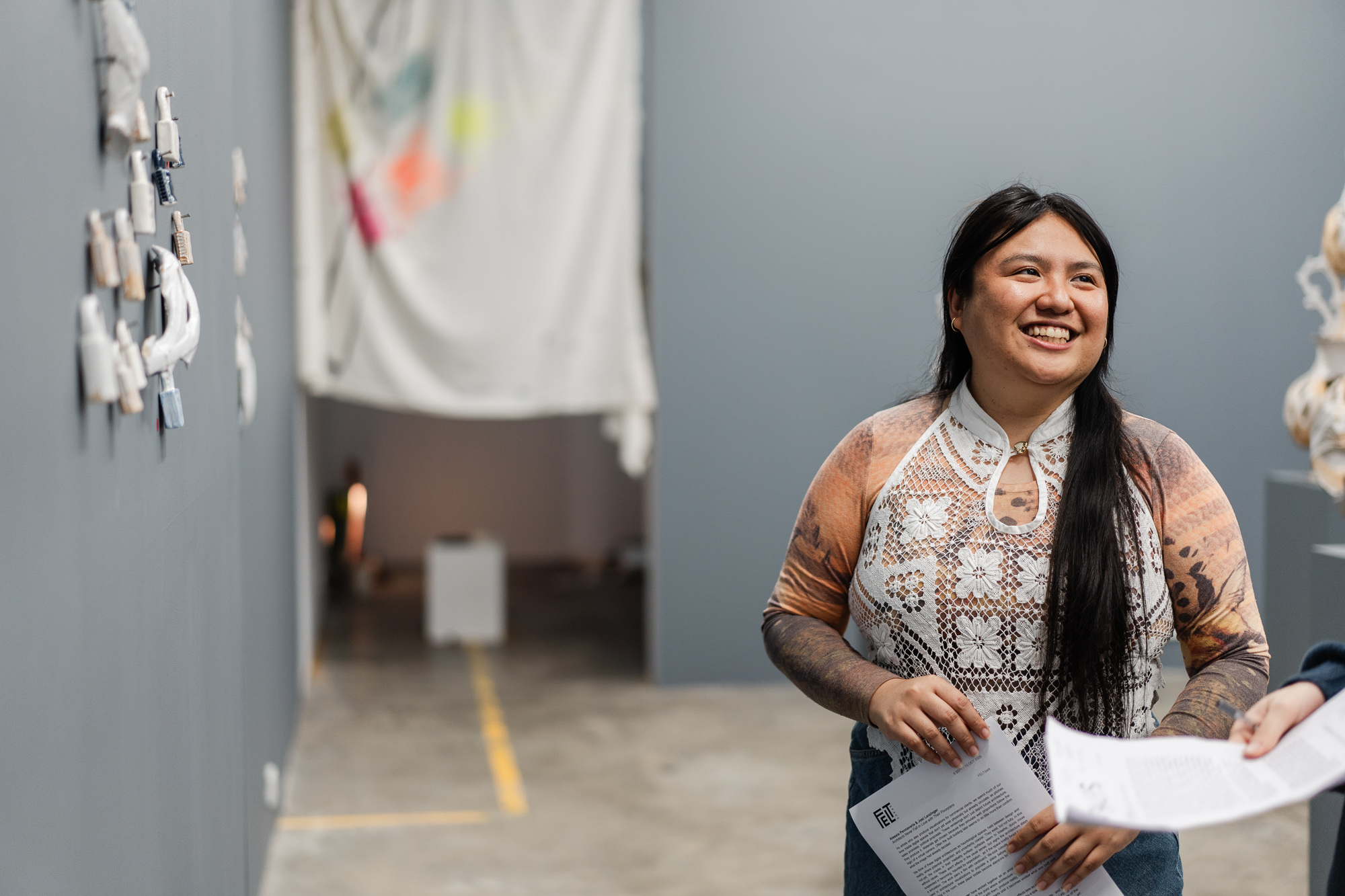
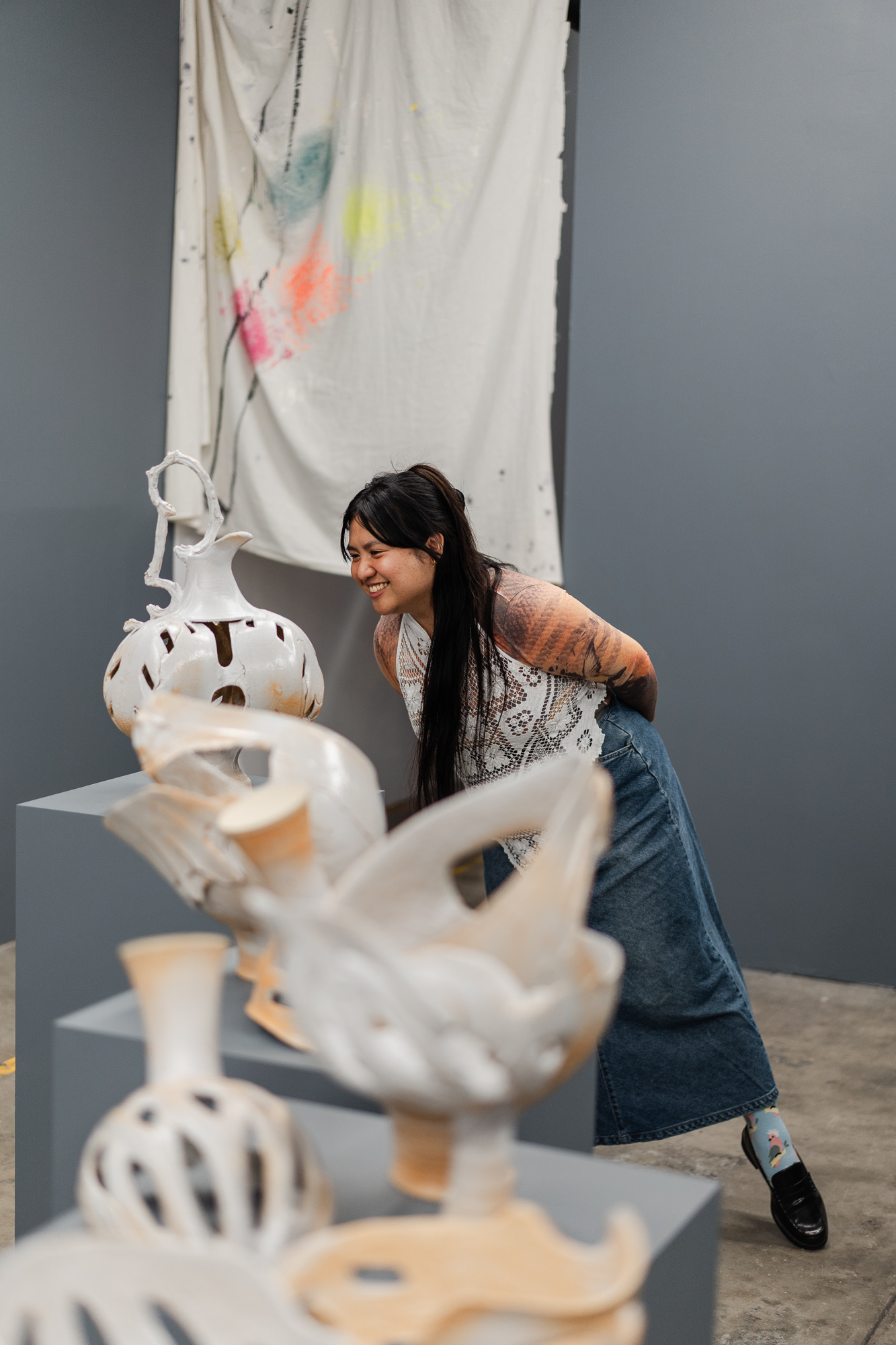
Images: Alyssa Powell-Ascura, pictured with artwork by Lilly Trnovsky, photos: Lana Adams.