
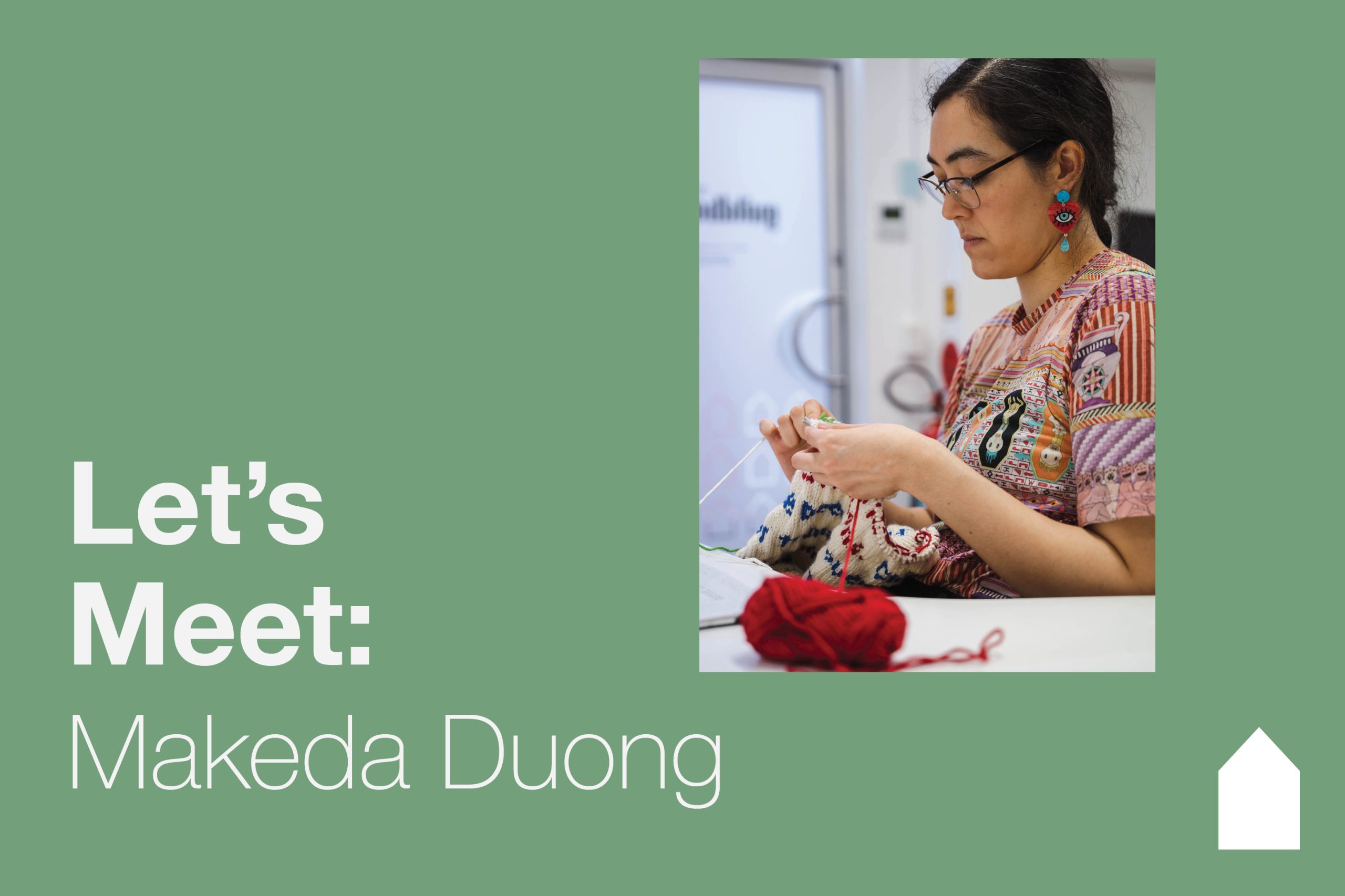
Image: Makeda Duong in Guildhouse Studios, photograph Lana Adams.
Makeda Duong is a contemporary artist living and working on Kaurna Land. Since graduating from the South Australian School of Art in 2013, her work has been exhibited in local and interstate galleries including the JamFactory, Craft + Design Canberra, Adelaide Contemporary Experimental (ACE), and as part of the fifth Tamworth Textile Triennial. She has participated in local and interstate residencies, and her work has been acquired by the Adelaide Migration Museum. Her practice attempts to represent aspects of her lived experience in relation to themes such as race, class, and mental illness.
How would you describe your practice in 5 words?
subversive, personal, humorous, acerbic, laborious
Why have you pursued a creative career?
I never considered ‘becoming an artist’ a conscious choice. I have intuitively known, for as long as I can remember, that it’s something that I have to do. If it weren’t for this, I probably would have considered something more lucrative! It goes beyond a passion, it’s more like a need. I need to make art as much as I need to exercise or need social interaction. Even so, I could have decided to keep it as a personal practice and not pursue it as a career. I think it’s because I want my artwork to be known, there’s something in me that hungers for that – I want to achieve artistic excellence, and there’s a discipline in that. Something else that motivates me is not wanting others who have gone through similar experiences of marginalisation or stigma to feel alone.
What are your key inspirations?
I feel inspired by people who are stigmatised and othered, but who refuse to feel shamed, and who speak out against it. I also have admiration for people who don’t necessarily speak out, but who live with something our society considers shameful. It takes courage to live your life unapologetically despite those things, and to leave that shame behind you, even in small everyday ways. Battling shame that has been put onto you can be a daily fight. Sometimes people who can relate to my works get in touch with me and we bond through a shared experience. They continue to inspire me.
Is there a historical artistic lineage you draw from?
I don’t draw as much from the traditional artistic lineage as I do from one that’s linked to women’s history. I have a couple of examples – around 1830, teenager Elizabeth Parker who had been working as a nursemaid, painstakingly embroidered a confessional text on a piece of linen. Parker’s text describes what she sees as her weaknesses and sins, and her cruel mistreatment at the hands of her employers. In 1895, a woman who had been committed to a mental asylum called Agnes Richter used her straitjacket as a diary by embroidering words directly onto the fabric. Neither of these women were considered artists at the time, but they produced groundbreaking works of art by using the textiles they had at hand to express themselves and survive traumatic experiences.
What’s one piece of advice you would give to your creative peers?
This isn’t even mine, I’ve borrowed it from Jerry Saltz, but it was so good I’m passing it on. Keep your rejections. Save them all in an email folder and stash them away like they’re precious. That way, every time you get a rejection it’s just another one that goes in the folder. It helps me to not take them personally and be too discouraged. Later you can go through them to remind yourself that rejection, however much it can sting, is such a huge part of a creative career.
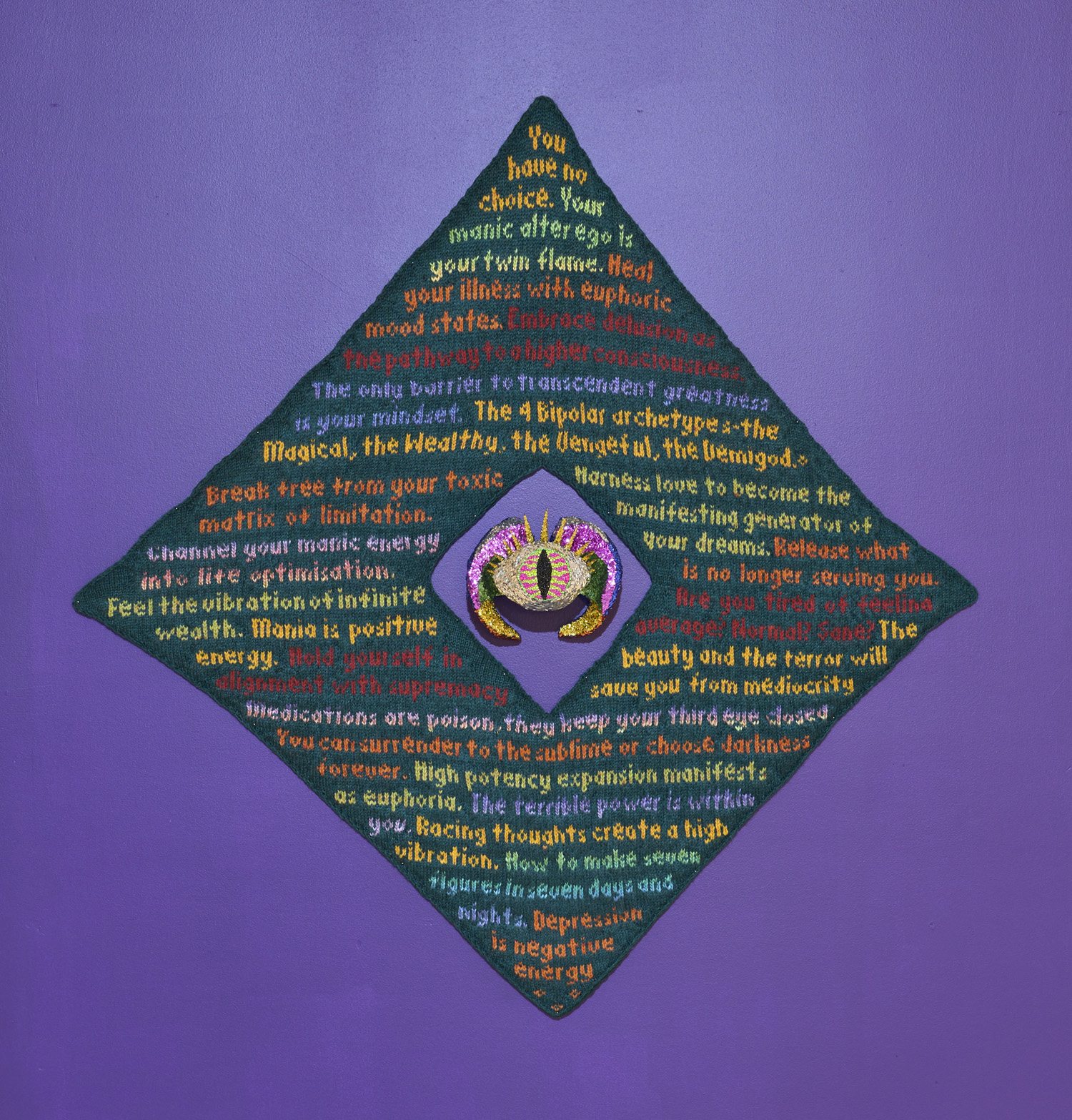
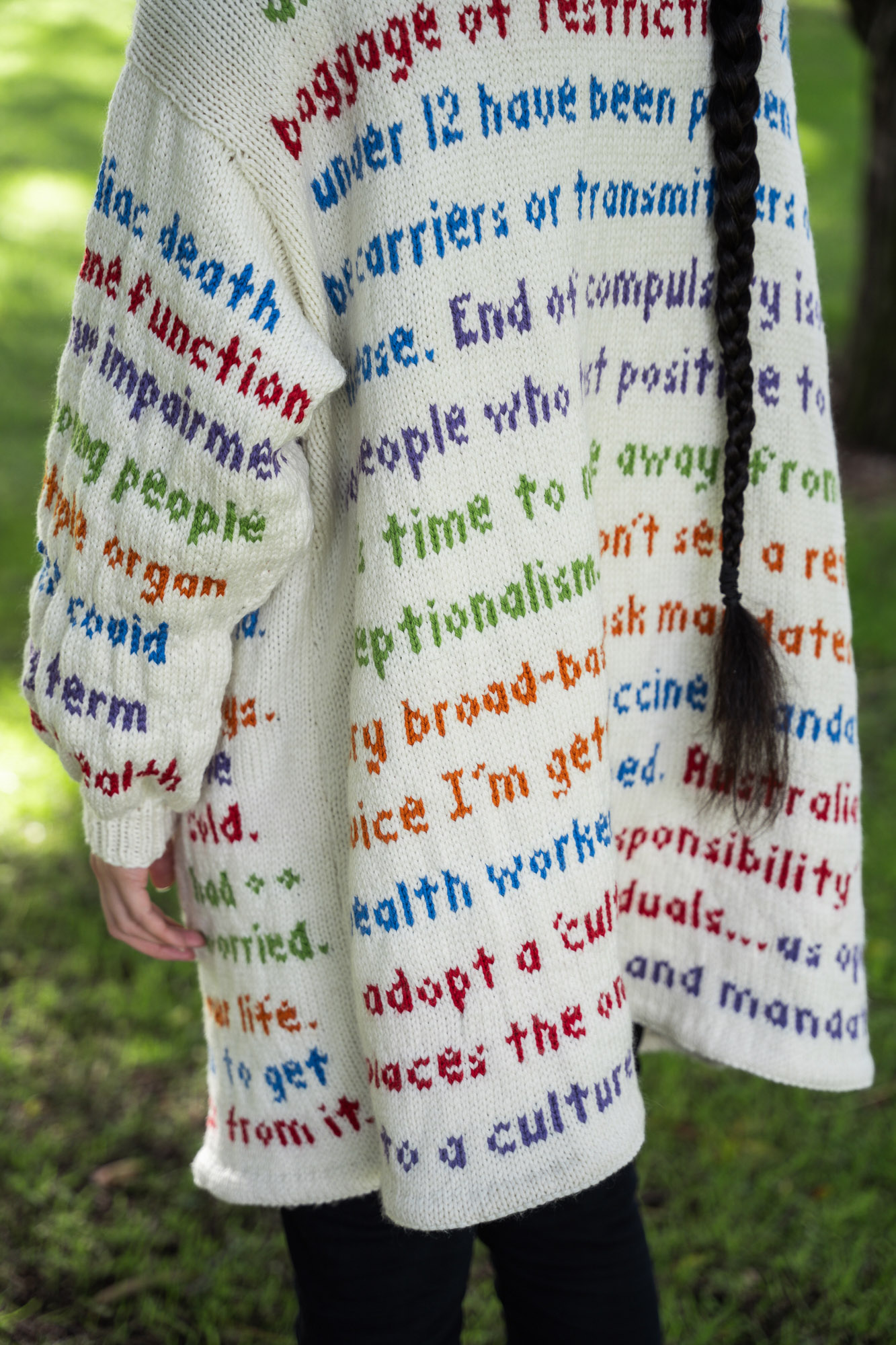
Images: Makeda Duong, Bipolar Guru, 2024, hand knitted yarn, felt, paper mache, polystyrene, sequins, nail jewels, epoxy, 120cm H x 122cm W x 11cm D, photograph Sam Roberts; Makeda Duong, Personal Responsibility 2, photograph courtesy the artist.