
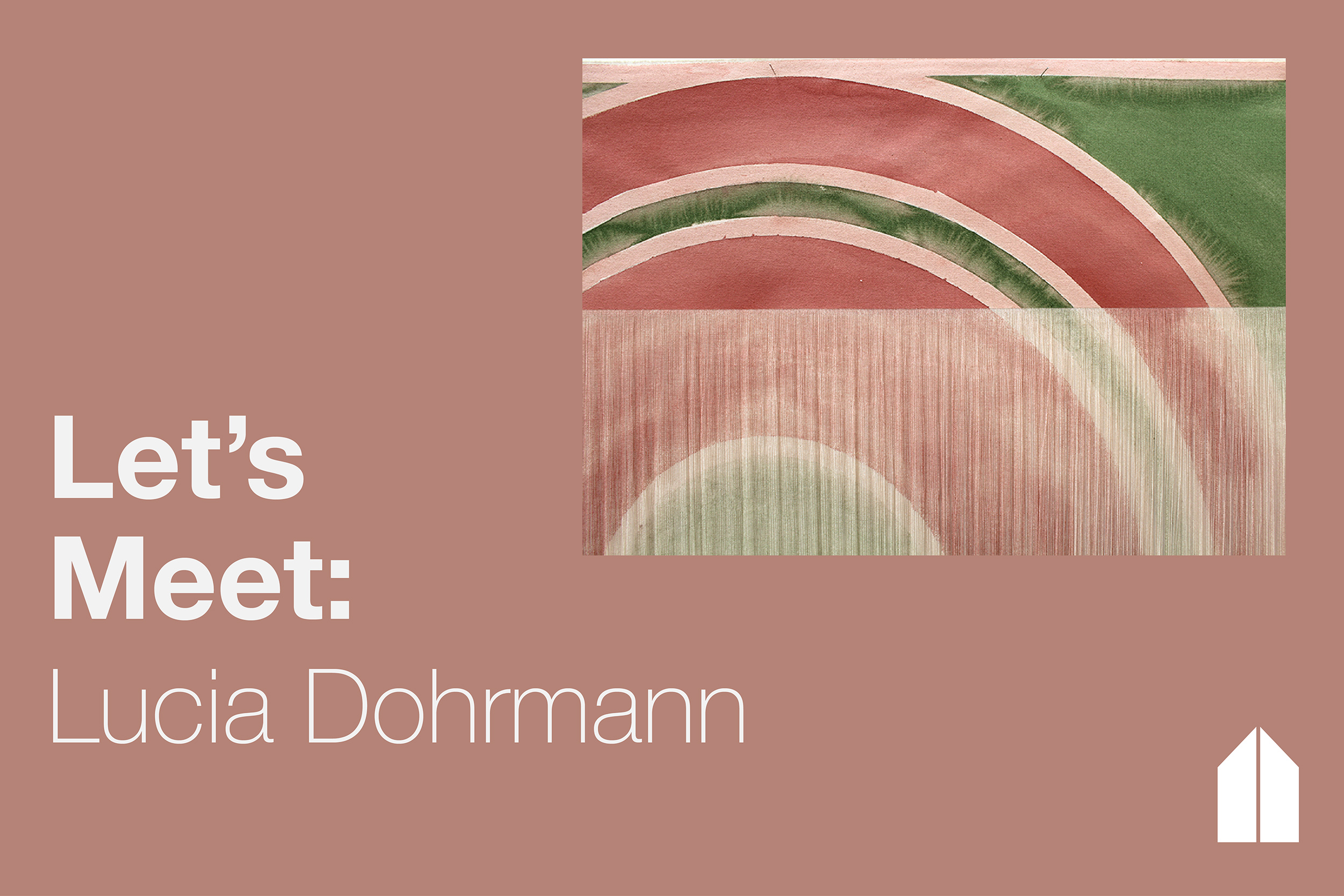
Image: Lucia Dohrmann, Concentric Circles – Warp (detail), 2020, photo: Emma Dohrmann
Lucia Dohrmann is an early career artist living and working in Adelaide/Tarndanya. Lucia’s work is held in a number of private collections and has been exhibited nationally, in solo exhibitions such as Visible Silence, West Gallery Thebarton (2020), and un/re weave, Post Office Projects (2025); and group exhibitions including Pliable Planes, UNSW Galleries (2022); and Radical Textiles, Art Gallery of South Australia (2025).
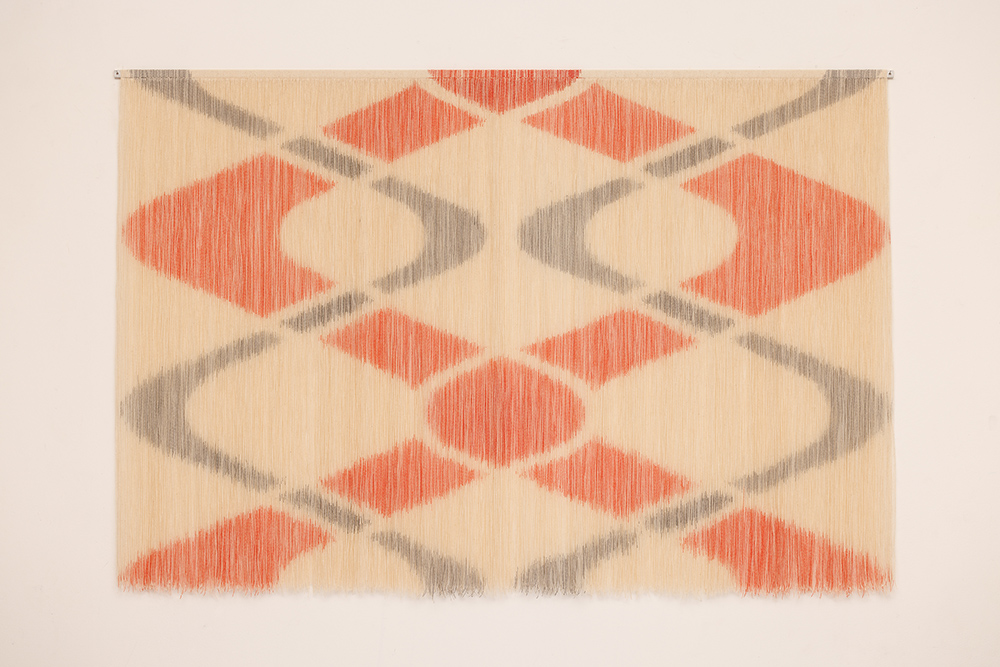
Lucia’s practice focuses on the connections between pattern and repetition, textile techniques and the mathematical thinking inherent in these processes. Working with painters’ canvas as her chosen ground, she challenges the idea of this material being merely a support or ground for painting. By unweaving this mechanically woven textile and reassembling the threads by hand, she softens hard-edged painted patterns and creates tactile surfaces that speak of labour, time and material transformation.
How would you describe your practice in 5 words?
Inventive, repetitive, slow, tactile, meditative
Do you have a foundational creative memory?
Yes. My mother was a dressmaker and taught me to sew, knit and crochet from a young age. There were always lots of textile materials in the house, such as patterned fabrics, yarn and my favorite tin of odd buttons. My father was also a maker and collector of hand tools. He had a deep material knowledge of making that probably came from growing up in Europe through the Second World War when materials were scarce and having to improvise with what was available. So, I guess it is inevitable that my art practice has a strong focus on materiality and handmade textile processes.
What does a day in the studio entail?
No day is the same, but typically I would start work in the studio at around 10am after a long walk. The mornings usually consist of responding to and sending emails, and any writing tasks. I also keep and regularly update visual diaries of ideas, pattern designs and documentation of works in progress, especially of new techniques I’m trialing. This is a habit that has stuck with me from my BVA classes at Adelaide Central School of Art. I’ll often refer back to these diaries, which I have kept since graduating, when I start working on a new exhibition or idea. The afternoons are typically when most of the making happens. This can range from designing new patterns, gridding up, drawing and taping patterns onto canvases, painting, unraveling canvases, creating ‘thread paintings’, warping looms, weaving or stitching. I normally don’t work past 6pm, and sometimes take an afternoon break to go for a short walk to give my back a stretch and hands a break.
Is there a historical creative lineage you draw from?
Yes, my practice draws from the ideas of a few twentieth century art movements and schools of thought, including minimalism, abstraction and the teachings of the Bauhaus. A constant historical touchstone for me is the works of Agnes Martin. I keep an image of my favorite Martin work, The Islands (1967), in my studio as a reminder to not over complicate the patterns and colours in my works. I also love the works and ideas of many other past and contemporary artists such as Anni Albers, Gunta Stölzl, Olga De Amaral, Hilarie Mais, Eveline Kotai, and Kay Lawrence, just to name a few.
Is there a piece of advice you would share with your creative peers?
- Trust your instincts. If you feel that something isn’t working, rework it or try something new.
- A few years ago I heard some mention that people will always remember your worst work, so don’t show work you’re not happy with.
- I think it’s important to keep the momentum going in your art practice. Keep working towards the next idea or project, by showing up in the studio even if you don’t know what that next project will be. Sometimes ideas will only be realized by ‘playing’ in the studio.
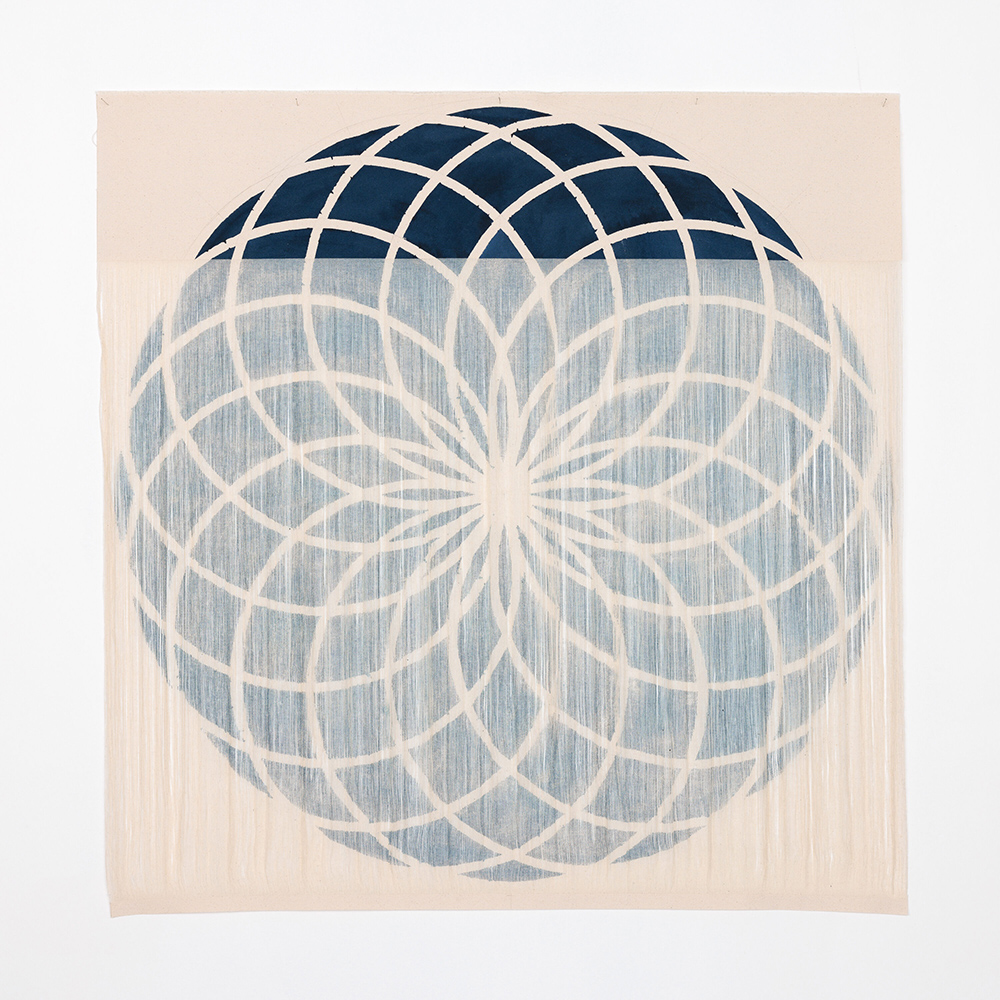
Images: Lucia Dohrmann, Circular Rosette – Warp, 2024, photo: Rosina Possingham.
Lucia Dohrmann, Sine Waves III – Weft, 2025, photo: Rosina Possingham.