
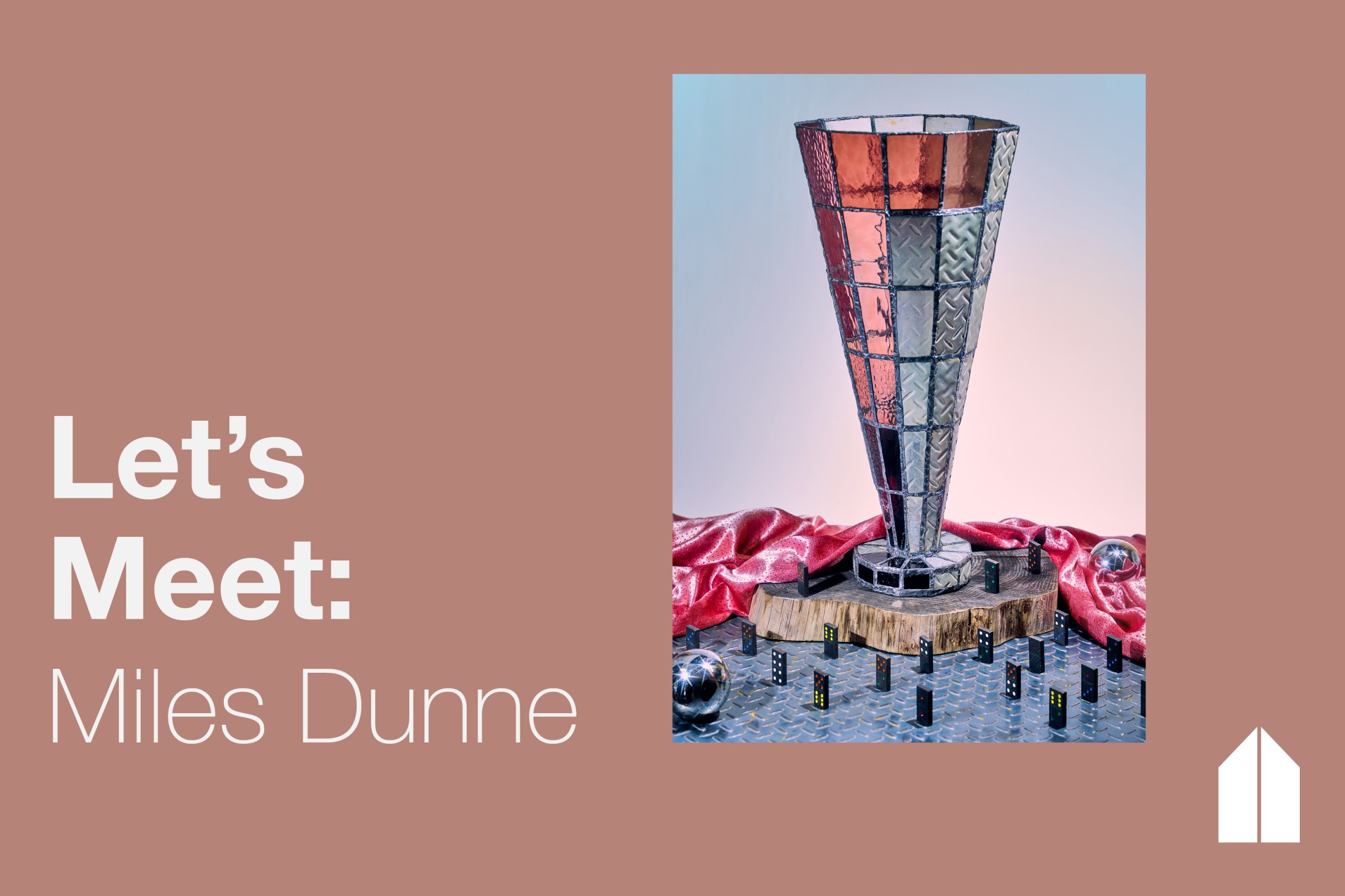
Image: Miles Dunne, Light on the Bedroom Wall, (collaborative work with Em Frank), 2026, Stoneware, glaze, glass, lead, copper, photo: Emmaline Zanelli.
Miles Dunne is an emerging multidisciplinary artist whose practice spans digital, sculpture, installation, and performance. Making in the intersection of digital programming, physical space, and object, their work questions common narratives and social structures taken for granted. In a practice that is continually evolving, Dunne employs technology as a medium, alongside a wide variety of physical materials, often in the pursuit of emergent or unintended behaviours. Whilst exploring dystopian and science fiction notions in his performance and installation work, his sculptural works reflect an appreciation of unintended beauty, and an attraction to the aesthetics of decay.
Where does the creative process begin for you?
Often my process begins with a small curiosity, sometimes for a new material, other times for a concept, or point of aesthetic inspiration. I’m very inspired by peculiarities in how light behaves, or how human made spaces and objects interact with the world around them. A lot of my initial ideas are sparked by these inspirations.
There is a pursuit for trying and learning new skills and processes woven into my practice. I’m often searching for accidental or unexpected outcomes, whether working digitally or physically, which drives a lot of my decisions.
What does a day in the studio entail?
I work across a lot of different mediums so it can look pretty different day to day. I’m in the studio a lot, constants are definitely making a pot of coffee to drink throughout the day, often good studio snacks and chats with various studio mates. I work out of Washdog Studio / fab workshop, and I’m often using shared spaces to create work, so there’s a lot of opportunity to discuss concepts and ask questions. I’m often working on a lot at once, and I can be pretty scattered in my workflow, so a lot of days I’ll pick up a lot of different projects throughout the day. At other times I’ll have my head down on one project, and spend long days locking in on one task.
How do you work through creative blocks?
Often my practice is moving at one hundred miles an hour, which isn’t necessarily an approach I recommend, but in a lot of ways combats creative block. Usually in between projects, when I have space to focus on developing personal works, I have a bank of ideas I’ve been waiting for the time to work on. Collaborative practice is also a great way to combat creative block, I always find that the experience of discussing concepts leads to new approaches and ideas pretty naturally. Another thing that really suits my brain and helps stop creative blocks is it working with a variety of mediums. I seem to get bored pretty quickly when I’m working in the same way, and love the process of constantly learning and feeling stimulated, so I’m always thinking in new materials when I approach projects.
How have you arrived at this point in your practice?
I’m someone who engages in the world through learning new skills, and I think that has really driven my development as a creative. At many points, I’ve been inspired to try working with new mediums, so I’ve searched for opportunities that would allow me to do so. There’s been many points where this approach has challenged me, or felt daunting, but it’s really helped me build confidence as a creative and has meant I’m always working towards things that feel exciting and inspiring.
I feel incredibly lucky to have found myself in the career I’m in, and I want to acknowledge how important creative mentors, and the support network I’ve found in Adelaide have been in that. Both Washdog and fab, and the studio residents and directors have had a huge influence on the direction of my practice. I also want to acknowledge Labrats, a community group the formed alongside The Lab at ILA, which was a pivotal point that led to me considering my arts practice as a potential career.
Is there an artistic medium you’re wanting to try?
I’ve had an itch for a while to try kiln forming glass. I’ve been working with glass through lead lighting but would love to extend this further. I’m interested in working with kilns more in general. I think there’s a magic to them and how they can transform materials that invites a way of making work that I haven’t experienced much.
Let’s Meet spotlights our South Australian Members.
Learn about Guildhouse Membership options here.
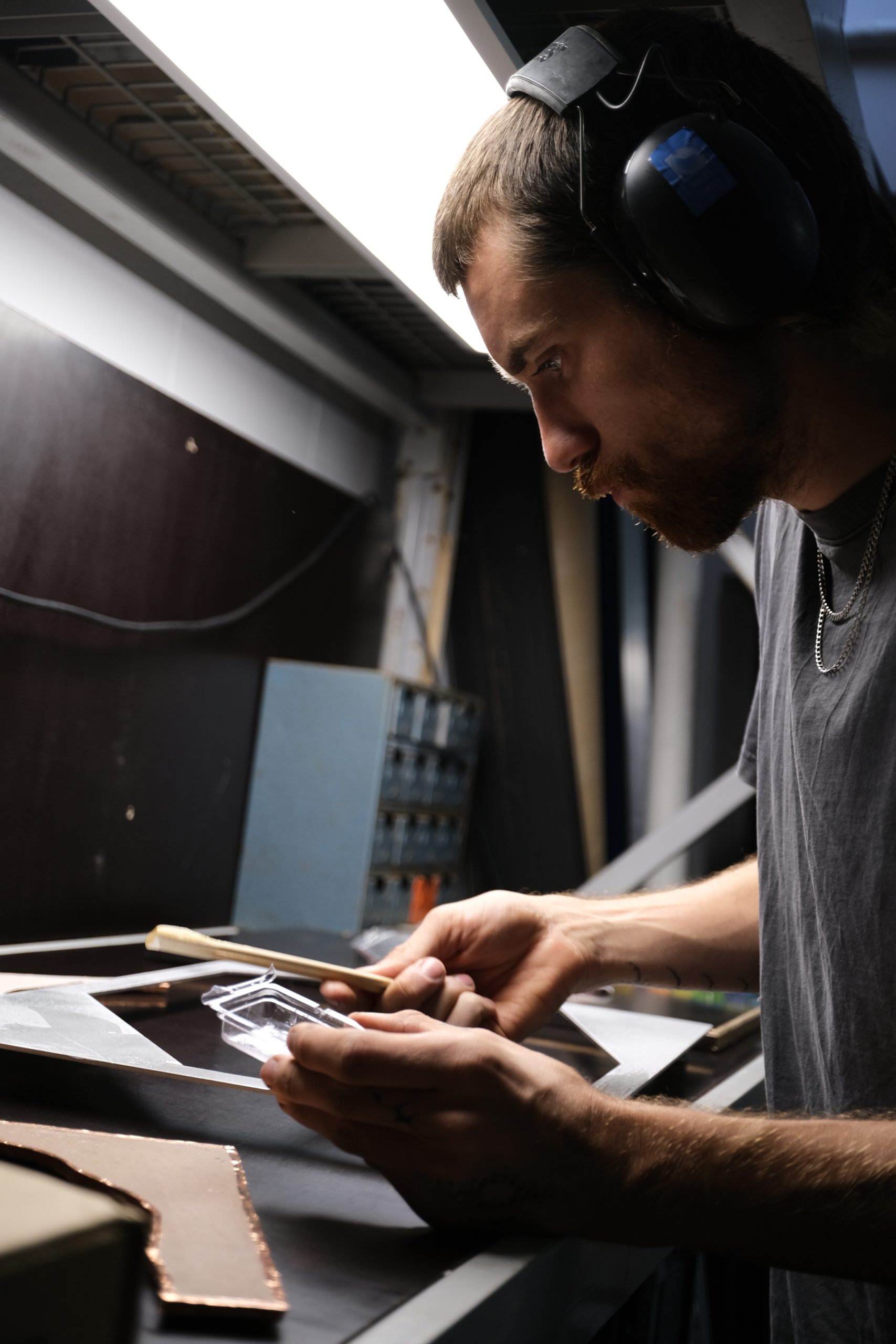
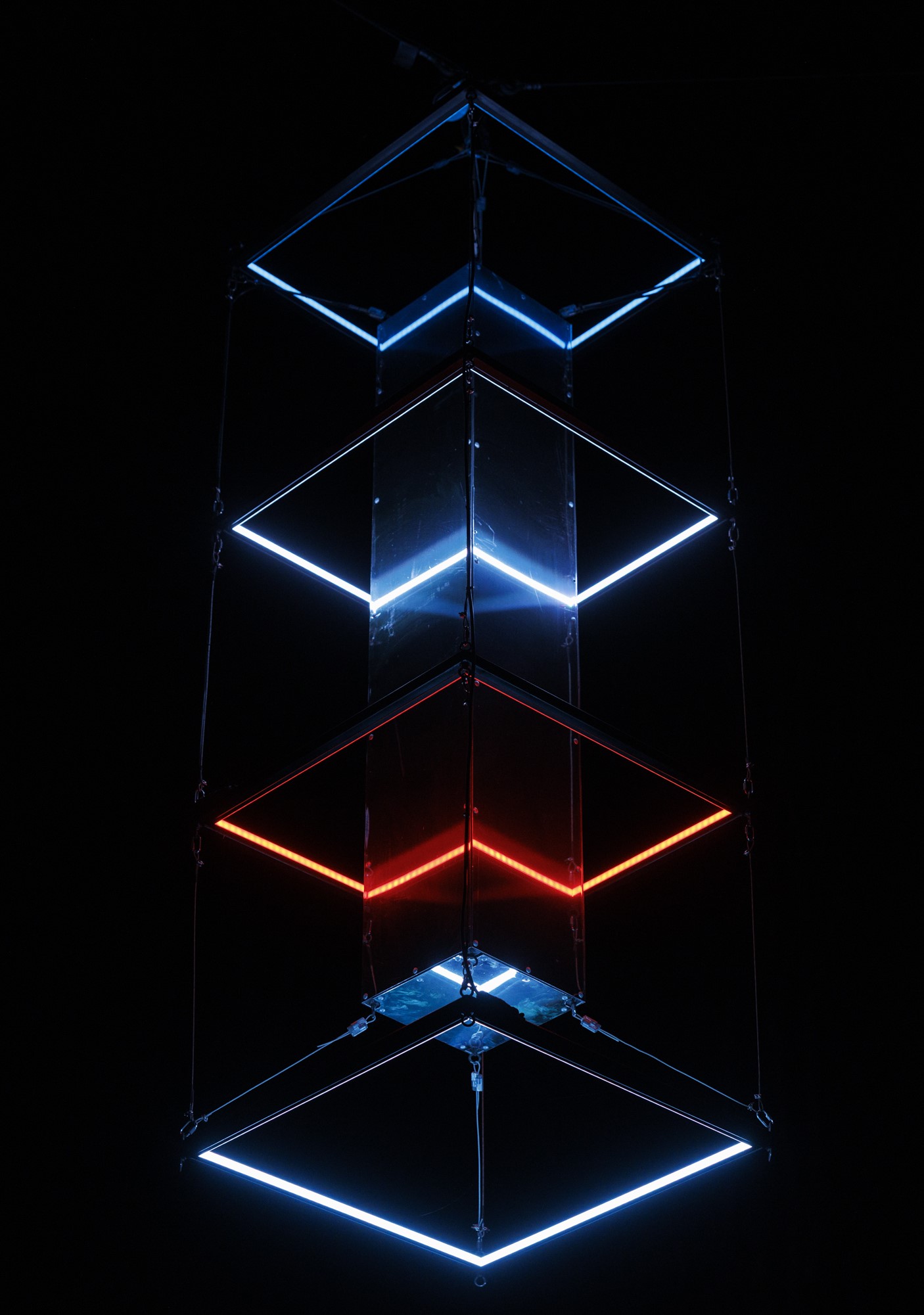
Images:
Miles Dunne, photo: Em Frank.
Miles Dunne, Time Emit, 2025, mild steel, LED, LED profile, ACP, wire rope, stainless steel components, microcontroller, photo: Rosina Possingham.