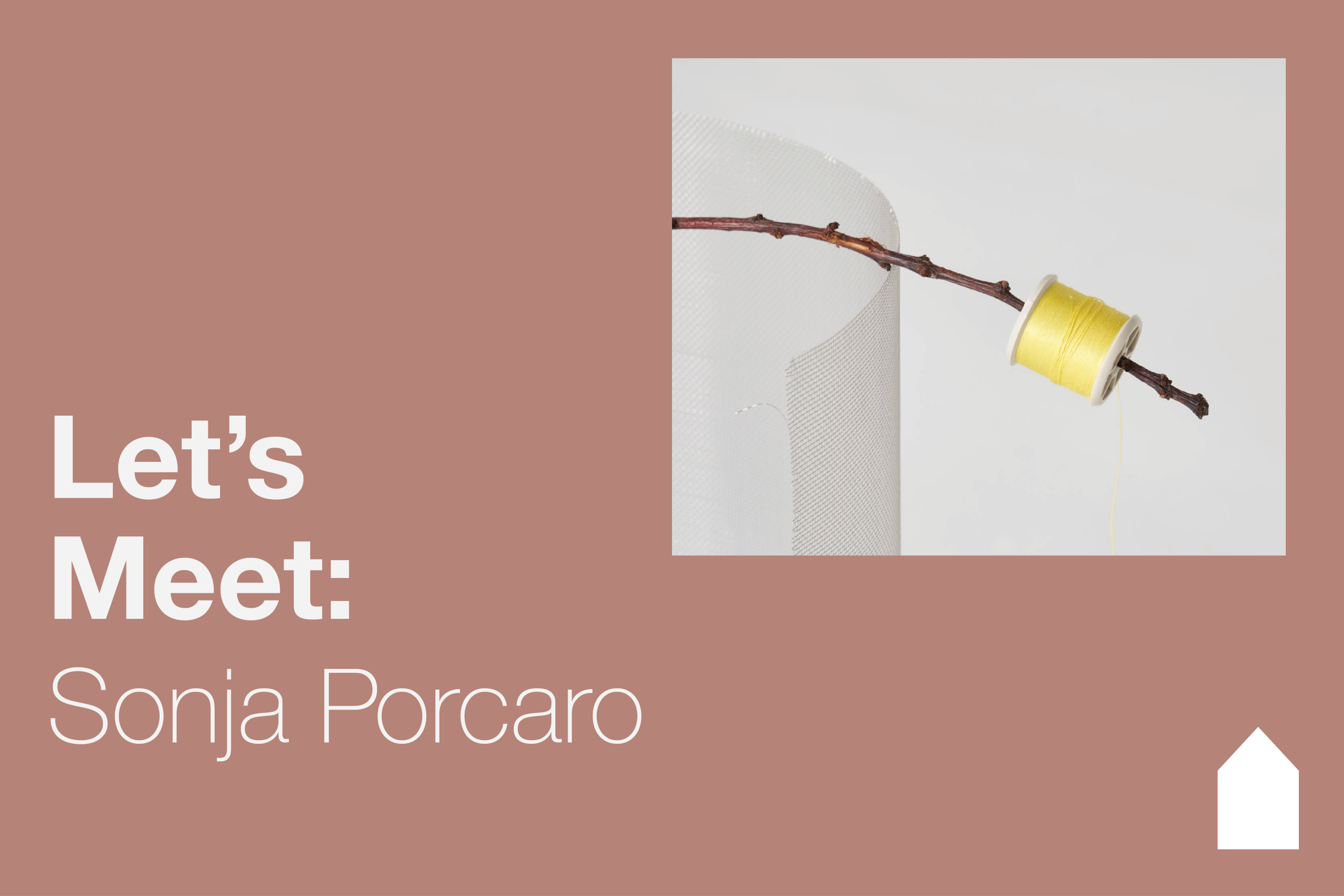
Image: Sonja Porcaro, Passaggio/Passage (detail), 2024, stainless steel mesh, gleaned apricot branch, vintage cotton spool, photo by Sam Roberts
Sonja Porcaro is an artist based in Tarntanya/Adelaide, working predominantly in sculpture and installation. Porcaro uses everyday objects and humble materials to create restrained and poetic works, often investigating notions of memory (drawing on her Italian migrant heritage), uncertainty and the fluidity of language, representation and meaning. Since graduating from the South Australian School of Art (1993), Porcaro has exhibited and undertaken residencies locally, nationally and internationally, in spaces such as the Art Gallery of South Australia, the Experimental Art Foundation (SA), Artspace (NSW), Viafarini (Milan, Italy) and Studio Kura (Itoshima, Japan). Porcaro is currently undertaking a Create SA Fellowship.
What does a day in the studio entail?
My work is strongly site responsive, particularly when I undertake residencies, so a ‘day in the studio’ entails deep consideration of the gallery/site and its surrounds, along with experimentation with various forms and materials that I am curious about at the time. If I am exploring a new material or process e.g. moulding and stitching wire mesh, it’s much trial and error and I document (photograph) work-in-progress as I go, and also write, draw and make notes. I also read and research extensively for each body of work. Currently, as part of the CreateSA Fellowship, my practice resembles more of a ‘regular job’ in that I go to a local community woodwork shed three days a week where I am learning many new skills and experimenting extensively – it’s been quite amazing! I also spend time sourcing objects from op shops such as vintage cotton spools and sourcing salvaged materials.
Is there a historical creative lineage you draw from?
Yes, and I’m also always discovering ‘new’ artists, often through revised art history books – particularly women artists who have been omitted from/minimised in the art canon. My own work both acknowledges and reworks the traditions of minimalism, abstraction and conceptual art. I love the work of Agnes Martin, Richard Tuttle, Karla Black, Lee Ufan, Melinda Harper and Mikala Dwyer. The creative lineage I draw from also encompasses poetry/poetics, philosophy, music, contemporary dance, film and architecture. One of the most profound experiences (art or otherwise) I have had was when I visited the Teshima Art Museum (Japan) in 2023, where there was an inextricable and beautiful melding of art, architecture and the environment in the work of Ryue Nishizawa and Rei Naito: I entered the space and was floored, in the best possible way – beyond language. The work of Emily Kam Kngwarray, Nyapanyapa Yunupingu and Nyaparu (William) Gardiner also deeply resonate.
Do you have a foundational creative memory?
Yes, and I often recount this when I give artists talks – my mother was a wonderful dressmaker and as a child I would sit at her feet whilst she sewed and ‘draw’ on the floor with bits of discarded cotton thread for hours, fashioning it into different shapes and forms. It is no coincidence that my work (over decades) has emphasised materiality, experimentation, form, often includes fabric, is usually pared back/minimal and explores memory, language and heritage. My parents migrated from the south of Italy and I grew up watching their creativity expressed in ways that it is integral to everyday life e.g. through gardening, sewing, woodwork. I also grew up in the back of their fruit and vegetable stores speaking Italian (my mother tongue) until I stopped speaking it in kindergarten and those foundational experiences inform my work (both directly and indirectly) – certain sights, sounds, smells, language, repetition, translation.
Where does the creative process begin for you?
Artists talk about starting from a place of ‘not knowing’ and that is critical to my practice, in foregrounding experimentation. I am always trying to push the materials and ideas in new directions (rather than re-hash older works). Having said that, former works (ideas, processes, materiality etc.) will inform newer works and there is often running threads throughout the work (including over decades) but it is important that I never rest on my laurels as an artist and to keep taking risks. It is where you are most vulnerable as an artist but also where the deepest satisfaction and joy reside. My work also strongly reflects my life at the time, so along with investigating heritage and ideas of language (amongst other concerns), over the last ten years or so my work has also been informed – even in oblique ways – by being a mother and that will continue.
What are your creative aspirations for the future?
Not to be morose, but to keep making work and exhibiting until I die! It is very difficult to maintain an arts practice, parent a young person and work a ‘day job’ but I am committed, unconditionally, to my practice.
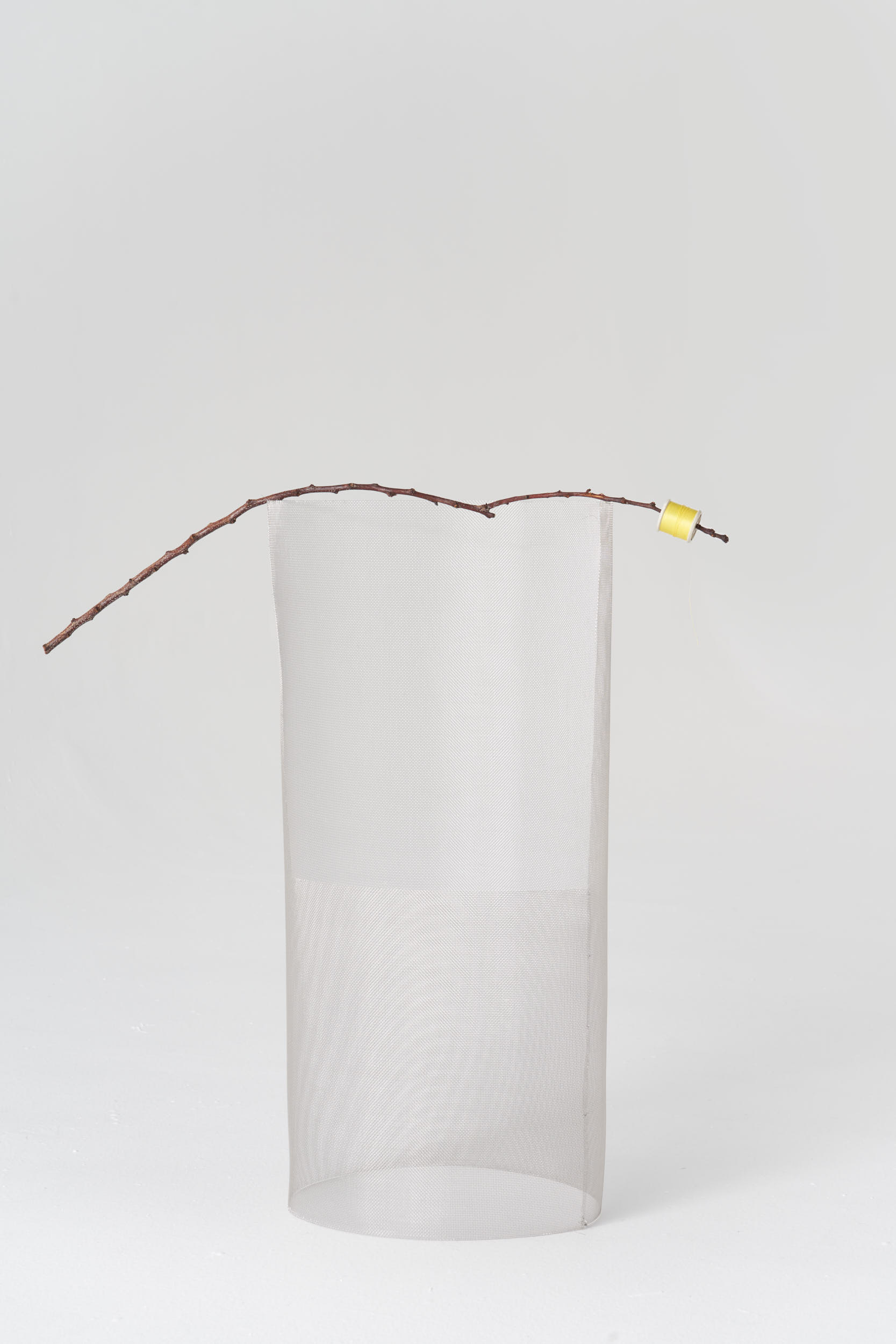
Images: Sonja Porcaro, Passaggio/Passage, 2024, stainless steel mesh, gleaned apricot branch, vintage cotton spool, photo by Sam Roberts.
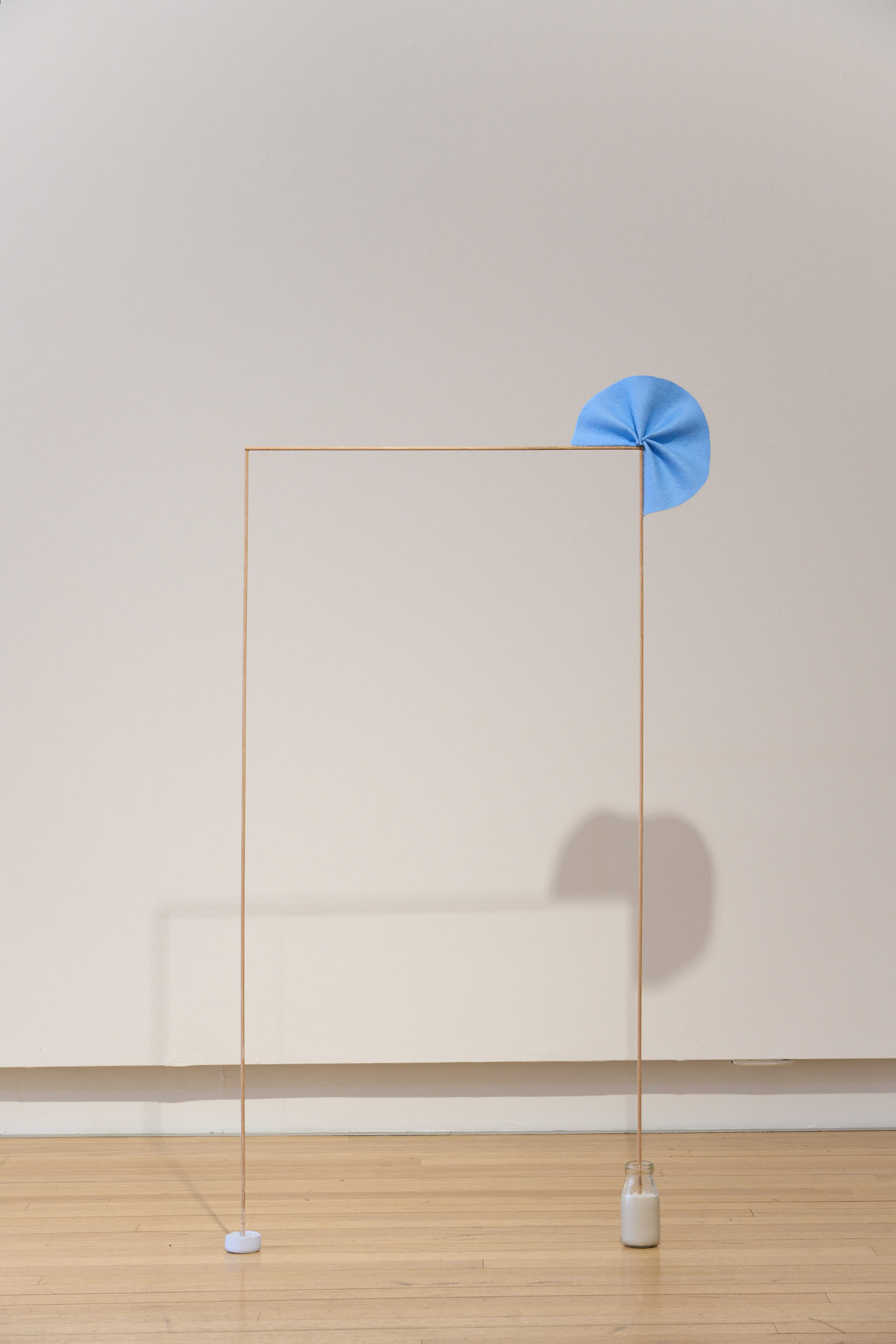
Sonja Porcaro, Like clouds (day by day, the years bloom), 2023, dowel, found milk bottle, plaster, tempera paint, wool felt, photo by Sam Roberts.