
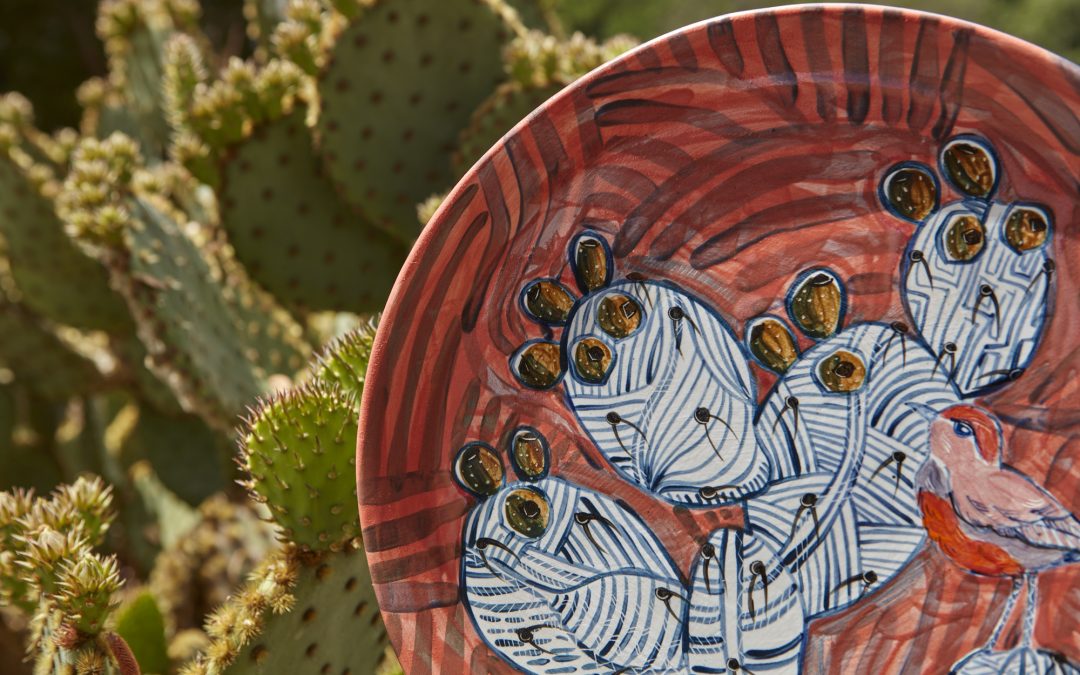
Image: Giuseppe Matteo Pappalardo, Pond Lily 028, ceramic plate, 48x48cm, photo David Russell
The Guildhouse Collections Project
Giuseppe Matteo Pappalardo
Opuntia and Olea: Stories of Adaptation
Presented in partnership with the Botanic Gardens and State Herbarium of South Australia
7 December 2025 — 28 February 2026
Artist Giuseppe Matteo Pappalardo examines the complex intersections of cultural heritage, ecology and migration. As an Australian-Italian artist, he draws from his lived experiences, developing new works across painting, ceramics, sculpture, installation and design. Drawing on specialisations in couture fashion and horticulture, the resolution of new works moves between hyper local and global, as he explores the cyclical (re)contextualisation of Opuntia (prickly pear) and Olea europaea (olive tree) in Opuntia and Olea: Stories of Adaptation.
The Guildhouse Collections Project with the Botanic Gardens and State Herbarium is supported by CreateSA.
Opuntia and Olea: Stories of Adaptation
Giuseppe Matteo Pappalardo
These installations explore the cultural and ecological dualities of Opuntia (prickly pear) and Olea europaea (olive tree), plants celebrated across Italy as cultural symbols of nourishment and beauty yet recast as weeds in the Australian landscape. Through ceramic installations that merge craft, ecology, and storytelling, these works reflect on migration, adaptation, and the shifting meaning of what is considered native or foreign. Each piece draws from both natural and cultural systems of exchange, transforming botanical histories into metaphors for belonging, resilience, and coexistence.
Floating Offerings
Ceramic plates 2025
Amazon Waterlily Pavilion
Categorised as weeds in Australia, in Italy, Opuntia (prickly pear) and Olea europaea (olives) are cherished cultural icons—olives pressed into oil, prickly pear fruits made into delicious sweets. These ceramic plates float like offerings, symbolising the nourishment that both plants provide to humans and fauna in other geographical realms.
Seed Totem
Stacked ceramic vases 2025
Ficus walk plinth
Stacked vases echo the shape of seeds or fruits—vessels of potential life. This installation celebrates the ecological roles of prickly pear and olive trees as food sources for fauna, emphasising coexistence and interdependence. The totem is a metaphor for growth, transformation, and the layered histories shared between species.
Under the Olive Tree
Ceramic vases 2025
Mediterranean Garden
Installed beneath an olive tree, these vases reference the quiet journeys of seeds—eaten by birds, carried afar, and deposited to begin life again. The work observes how plants migrate and adapt through both ecological and human movement. It honours the olive as a cultural and ecological traveller, whose propagation mirrors patterns of migration, exchange, and belonging.
Fragments of the Colony
Broken ceramic vases 2025
Grotto – Palm House
A cluster of shattered ceramics reflects on colonial histories and ecological disruption. Broken vessels represent ecosystems fractured by displacement — where plants like prickly pear and olives, introduced by Europeans, became simultaneously, symbols of survival and invasion. These symbols coexist in the same space, much like Australia’s multicultural landscape, evoking fragility, resilience, and the possibility of new harmonies within a broken system.
Story of the Soil
Ceramic vases, plates, sculptures, bricks, and tiles – 2025
Museum of Economic Botany
Installations in the Museum are my personal reflection on place, identity, and transformation. They represent the culmination of my research in the Adelaide Botanic Garden and artistic journey through the dual lives of Opuntia and Olea. Story of the Soil is a self-portrait of belonging and displacement—of roots crossing oceans and taking hold in new ground.
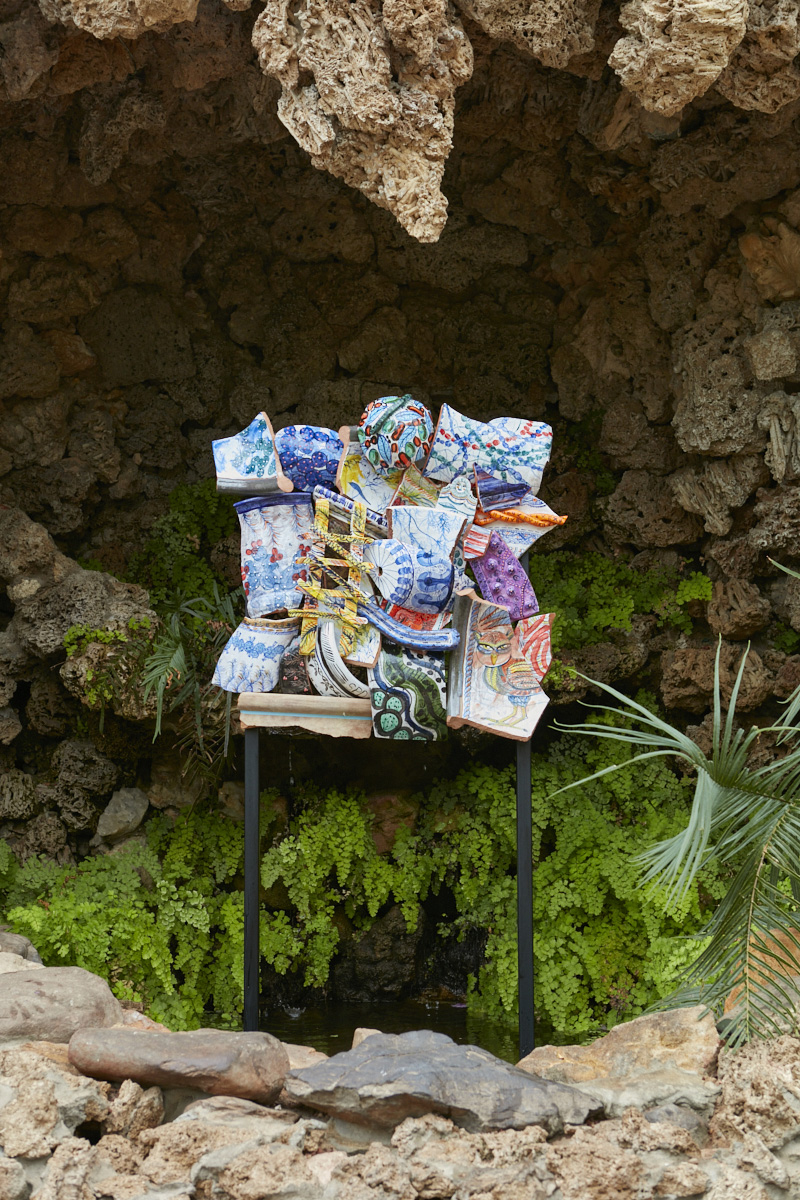
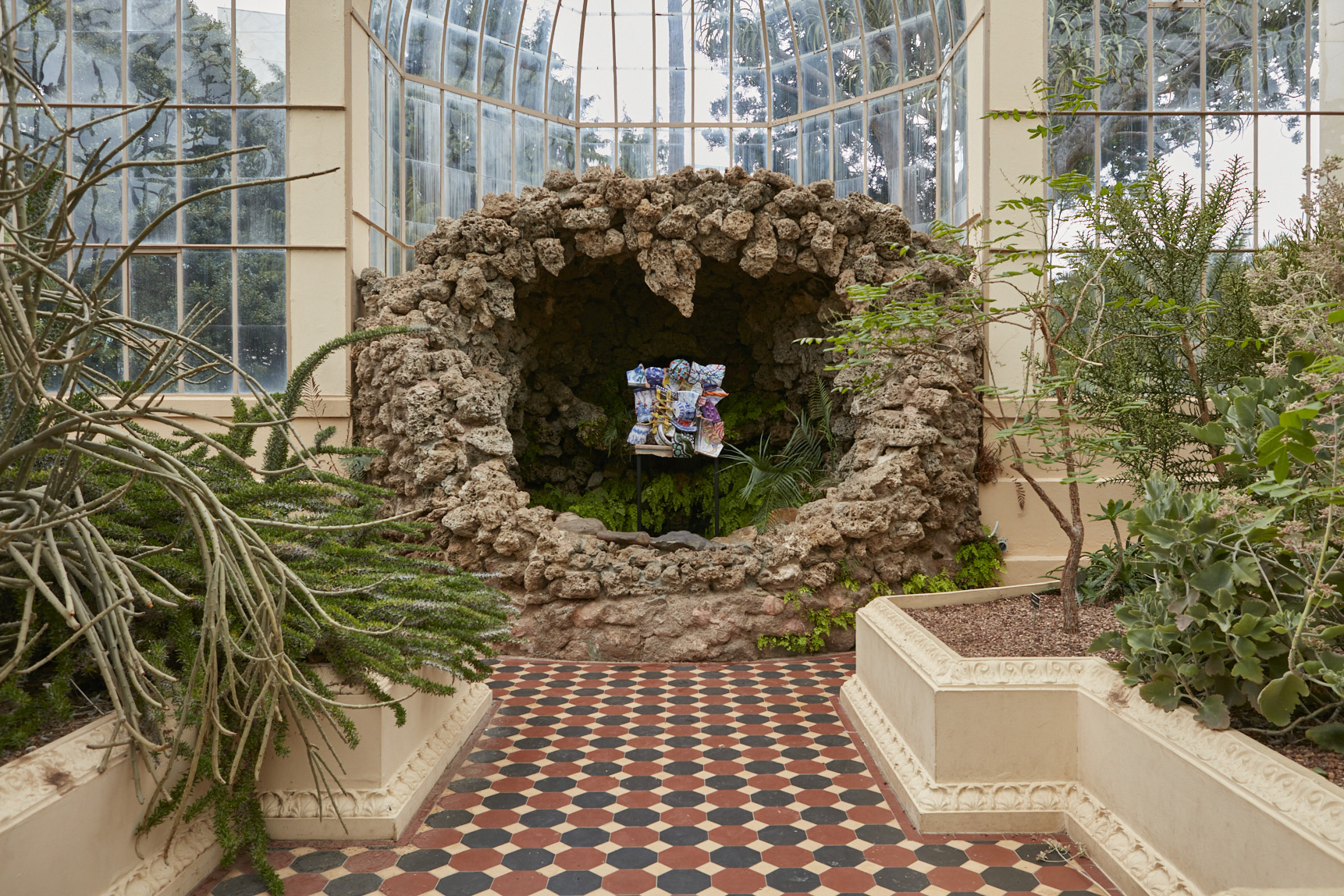
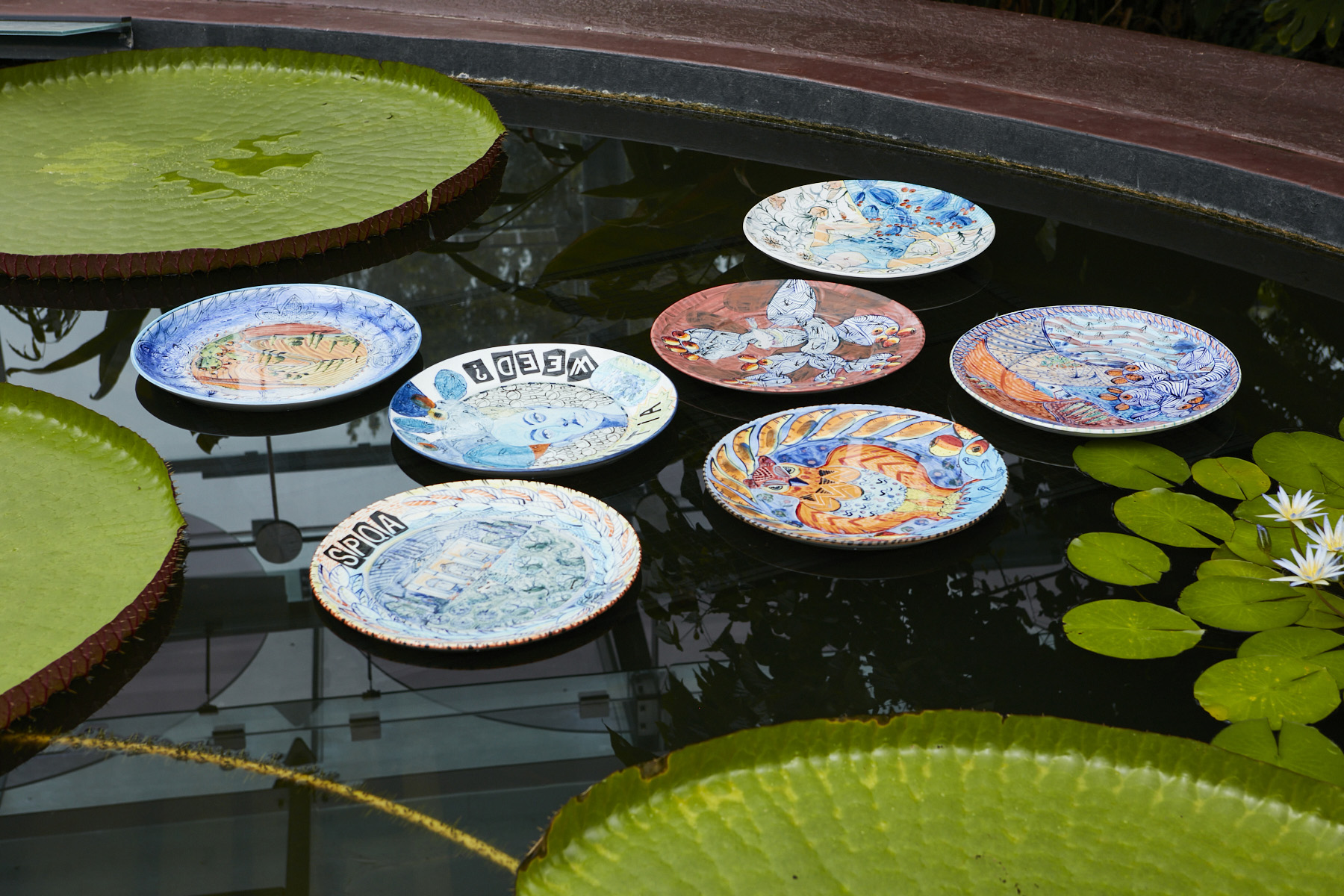
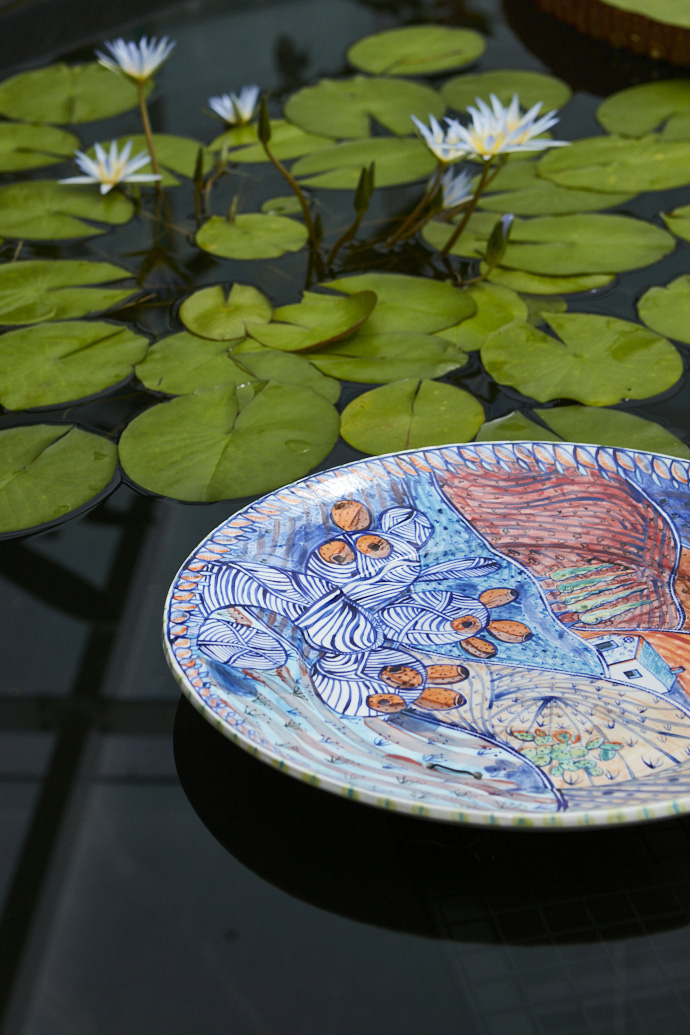
Images: Giuseppe Matteo Pappalardo, Opuntia and Olea: Stories of Adaptation, The Guildhouse Collections Project with the Botanic Gardens and State Herbarium, installaton view, photos David Russell
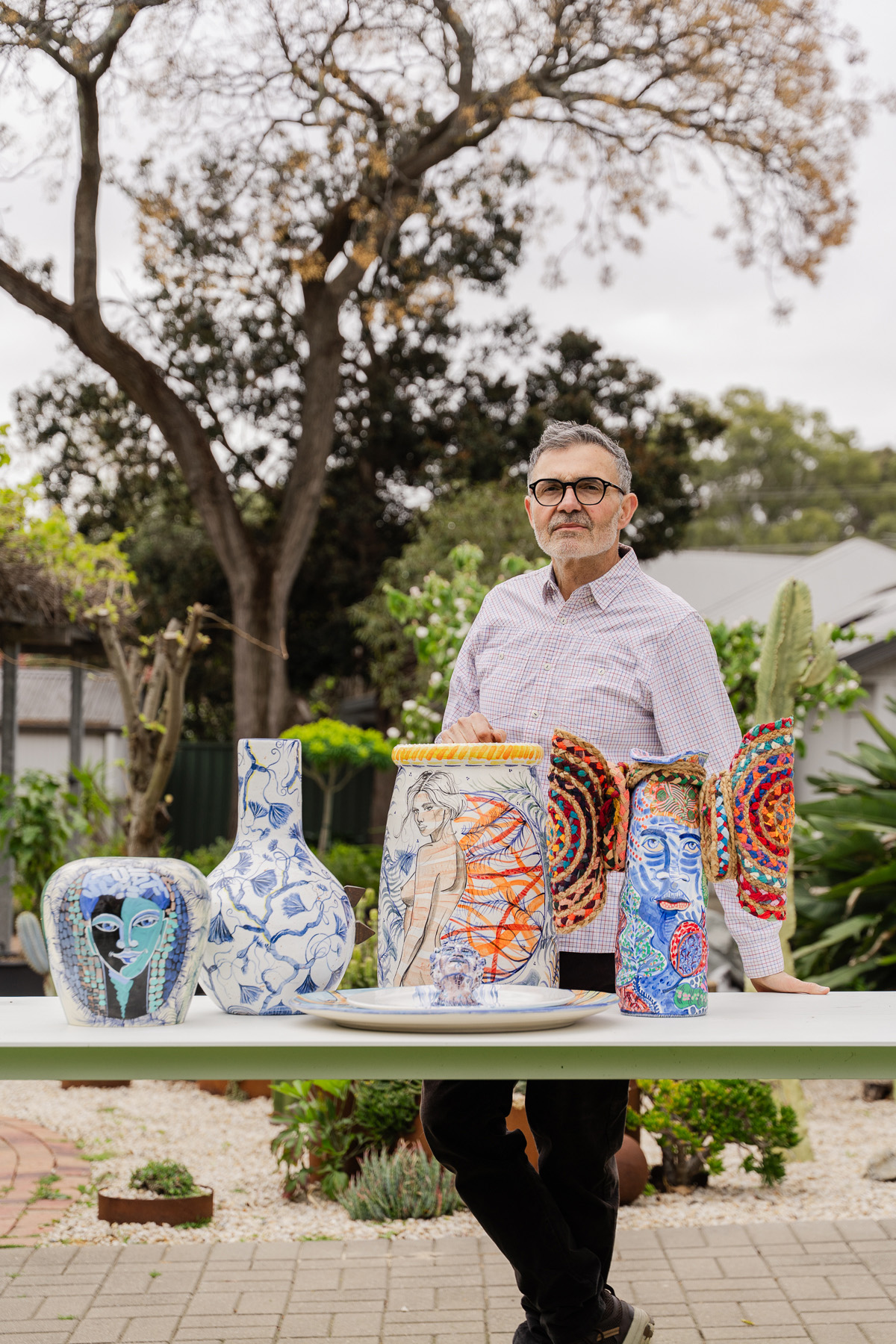
Giuseppe Matteo Pappalardo, photo Lana Adams
Giuseppe Matteo Pappalardo is an Australian-Italian artist, designer and horticulturalist from Catania, Italy and now based in Adelaide, South Australia. Through the mediums of painting, ceramics, sculpture and couture design he explores the complex intersections between art, ecology and culture.
Guiseppe’s formal training includes a Diploma in Arte del Tessuto (Istituto di Belle Arti di Sciacca, 1985-1990); Bachelor Degrees in both Fashion Design and Communication (Polimoda, Florence, 1990-1993) and Set and Costume Design (Accademia di Belle Arti Michelangelo, Agrigento,1995-1999); Masters of Design (Swinburne University of Technology, Melbourne, 2004-2006) and Certificate III in Horticulture (TAFE, South Australia 2023).
Pappalardo has undertaken artistic residencies and presented new works in both solo and group exhibitions in multiple venues in Italy and Australia. As a designer, Pappalardo has an established practice in couture fashion with Gianni Versace; scenography and costume design with Franco Zeffirelli and as a freelance consultant and collaborator with innovative brands such as Ikea Business, Charlie Brown, Bally, Louis Vuitton, Diesel, Roberto Cavalli Home, and Versace Home.
Represented by BMG Art, he continues to develop new works experimenting across materials and specialisations; as a storyteller and provocateur inviting curiosity and contemplation through form, colour and texture.
